

The Gunn Family Trilogy · Book One
Who Killed Lenny Gunn?
Whoever finds her husband’s killer inherits the Gunn empire.
Queenie Gunn has called the whole family round to tell them she’s dying. Cue the vultures. The Gunns have run their corner of Islington and Hackney for decades, and every single one of them reckons the crown should be theirs. But Lenny Gunn, Queenie’s husband, was murdered in 1996, and somebody sitting at that table knows a lot more about it than they’ve ever let on. Whoever finds his killer gets the lot. Pour yourself a large one. This family is about to start eating itself.
Loved MobLand? The Gunn Family Trilogy is the book version.
Inside the story
One dying queen. One empty throne. One killer at the table.
Nobody in the Gunn family says no to Queenie, so when she summons them all to the house, they come. Children, grandchildren, the cousin nobody quite trusts, every last one of them pretending not to care about the money. Then she tells them. She has six months to live.
For decades the Gunns have run their corner of Islington and Hackney, from the canal-side pubs to the back streets nobody else would dare walk at night. Everyone at that table has an idea about who should take over. Queenie has a different idea altogether. Her husband Lenny was murdered on 14 March 1996, and in all the years since, nobody has ever paid for it. Whoever finds his killer gets the lot.
So the hunt begins, and it turns family against family. Old loyalties crack. Secrets that have stayed buried for decades start working their way to the surface. Somewhere in all of this is a person who has been lying to Queenie’s face since the day Lenny died, and they will do anything to keep it that way.
It’s dark, it’s tense, and it’s funnier than a gangland saga has any right to be. Every Gunn has their own voice, their own grudge and their own reason to want that crown. You’ll pick a favourite by chapter three. You’ll suspect them by chapter ten.
Chapter One
Read the first chapter
Queenie Gunn’s seventy-fifth birthday. Sixty people in one pub, and Stevie is giving it ten minutes before somebody throws a punch. Pull up a chair.
Or read it on this page
Stevie gave it ten minutes before somebody threw a punch. That was generous of her. With the Gunns, she normally gave it five.
The Lock Keeper sat at the bottom of Wharf Road with its back to City Road Basin, a squat Victorian pub painted the green of a snooker table, every window steamed solid. Someone had tied two silver balloons to the drainpipe, a seven and a five, and they knocked together in the drizzle like a pair of old drunks holding each other up.
Stevie stood on the opposite pavement with her hands shoved deep in her coat pockets and gave serious thought to getting back on the 394.
Her mum would have gone straight in. Carol never hovered outside anything in her life. Stevie had been eight when she woke up in a hotel room in Magaluf to an empty bed and a balcony door left open, and twenty-one years later she still caught herself doing it, working out what her mum would have done, as if she might be marked on it later. There was no grave. Everyone said the sea had kept her. There was a bench in Clissold Park with a brass plaque the squirrels sat on. Every year on Stevie’s birthday somebody left a bunch of yellow freesias on it, the flowers her mum used to put in a jam jar on the windowsill in Homerton, and every year Bernie swore blind it wasn’t her. In a shoebox under Stevie’s bed there was an old answerphone tape she played on a machine she’d bought off eBay for the purpose. It’s Carol. Leave a message, and don’t be boring. Eleven seconds. She knew every breath of it.
Twenty-one years. You managed twenty-one years. Make it twenty-two.
The invitation was in her pocket, and her fingers kept finding its edges. Thick cream card. Gold trim. Her grandmother’s handwriting slanting across it in real ink.
Saturday. Seven o’clock. Don’t make me send Raymond twice.
Raymond had come once already. On Thursday afternoon he had walked into Pinnock & Rowe on Mare Street, filled the doorway of a probate research office that had never held anything more dangerous than a filing cabinet, put the envelope on Stevie’s desk and left without a word. Mr Pinnock had needed a sit down and two custard creams. She crossed the road.
Ray was on the door. Of course he was. Fifty-two years old, head shaved to the bone, a neck that ran straight into his shoulders without bothering to stop, and a pair of hands folded in front of him that had done things Stevie had spent her whole adult life choosing not to picture. He watched her come all the way across Wharf Road, and his face did nothing.
“Evening, Uncle Ray.”
“Bag.”
“You’re joking.”
He held out one hand. She gave him the bag. He went through it with two fingers: lipstick, keys, purse, a paperback with a broken spine, a folder of death certificates she’d forgotten to leave at work, half a Twirl. He looked at the folder. He held the Twirl up to the light as if it might be wired. Then he handed everything back.
“Habit,” he said.
“Yours or the family’s?”
Something twitched at the corner of his mouth. It was gone before she could be sure she’d seen it, and he stepped aside to let her in.
The heat hit her first, then the noise. Sixty people packed into a room built for thirty, all shouting over Chas & Dave on the jukebox. Brass rails. Carpet the colour of a bruise, tacky underfoot. Framed photographs of narrowboats on every wall, and behind the bar a sign carved into dark wood: FAMILY FIRST. FAMILY ONLY. Everybody in here belonged to the Cut, one way or another.
That was what the old boatmen called the Regent’s Canal, and it was what the Gunns called their business. For forty years they had run the water from King’s Cross to the River Lea. The moorings. The boatyards. The licences, the three pubs along the towpath, and whatever travelled that canal after dark without ever being written down. Nobody in this room would say any of it out loud. You grew up knowing it, the same as you grew up knowing never to sit in Queenie’s chair.
H found her first. He always did. He was a short, round man of forty-nine with sandy hair combed carefully over the thin bit, ears that stuck out, and eyes too big for his face, like a boy who’d been left out in the rain and grown up anyway. He’d been christened Henry, but nobody except Queenie had called him that since about 1985.
“Oi oi! Trace, look who it ain’t!” He wrapped her in a hug that smelt of Lynx and the betting shop, then held her at arm’s length. “Look at you, girl. All grown up with a proper job and everything. Go on, pick a card. I’m a mug for a card trick, me.”
“Uncle H…”
“Go on, treacle. Any card.”
She picked one. He took it, shuffled with a flourish that sent two cards skidding across the floor, and pulled the queen of hearts from behind her ear.
“Still got it, girl,” he said.
“You never had it.”
He laughed, the big soft laugh she remembered from being small, and for a second she was glad she’d come. His phone buzzed in his jacket. He didn’t reach for it. His eyes went to the door instead, fast, and came back again with the smile stuck on a little too firmly.
Owes somebody money, Stevie thought. Still.
Tracie was behind the bar, glasses on a chain around her neck, counting a wad of twenties into a cash bag at her own mother-in-law’s party. She was forty-six, with ash-blonde highlights scraped back hard, cheekbones you could open post with, and the figure of a woman who had never once had a second roast potato. She looked up, took Stevie in from boots to fringe in one sweep, and went back to counting.
“Stevie.”
“Aunty Tracie.”
“Just Tracie, hun.”
“Lovely to see you too.”
Tracie licked her thumb and carried on. H squeezed Stevie’s shoulder in apology and drifted off towards the fruit machine as if it had called his name.
“Ayyy, here she is!”
Tom came through the crowd with his phone held up in front of him, filming. Twenty-six, white trainers that had never met a puddle, a gold watch on his wrist worth more than Stevie’s car. He was tall and whippet-thin, with his dad’s pale eyes and black hair faded tight at the sides, and he was good-looking in a way that knew it. The last time she’d seen him he’d been a spiteful little boy with a runny nose. He had grown into his face and kept the spite.
“Say wagwan to the followers, cuz. Everyone, this is my cousin Stevie. The one that got away, innit.” He swung the phone round to himself. “Digs up dead people for money. That’s peak, you know.”
“Only the ones with savings,” Stevie said. “You’re safe.”
The people nearest them laughed. Tom laughed too, loud, and his eyes didn’t join in at all.
A hand landed on his arm. Patsy, Ray’s wife, thin as a coat hanger in a sequinned top, with a smile that had been fixed in place since six o’clock. Her hair was a hard bright blonde, set high and sprayed solid, and her eyes didn’t go anywhere near the smile.
“Aww, leave it, son,” she said. “Bless her, it’s your nan’s night.”
Tom lowered the phone and winked at Stevie. Patsy didn’t let go of his arm, and Stevie noticed she didn’t let go of it for the rest of the evening.
“Get that down you.”
A plate arrived under Stevie’s nose: pie, mash and a lake of green liquor, still steaming. Behind it stood Hilda Crowther, seventy-something, arms like a docker, who had run the pie and mash shop on Chapel Market since before decimal money and knew the business of every family between the Angel and Hackney Wick.
“You’re all bones,” Hilda said. “Your mum was the same. Get that down your Gregory.”
“Hello, Hilda.”
Hilda leaned in. She smelt of vinegar and Silk Cut. “She’s had her mince pies on that door all night, waiting for you. Don’t let her see you’re nervous.”
“I’m not nervous.”
“Course you’re not, love.” Hilda patted her cheek hard enough to count as a slap and nodded towards the back of the room. “Go on. She won’t bite. Not tonight, anyway.”
Queenie Gunn sat in the corner booth beneath the window, and the whole pub arranged itself around her without seeming to notice it was doing so.
She was tiny. That was the first thing people forgot about her, once they’d met her. Five foot nothing in heels, white hair set in stiff soft waves, pearls at her throat, a gold ring on every finger except one. Behind her, through the glass, City Road Basin lay black and glittering in the rain. Moored against the far wall, where she had been for as long as Stevie could remember, The Duchess sat low in the water with her cabin lights glowing.
Queenie held an unlit cigarette between two fingers. She had given up smoking twenty years ago. She had never given up holding them.
“Come here,” she said. “Let me look at you.”
Stevie came. Queenie looked. It took a long time, and the booth around them emptied without anyone being asked. Stevie knew what she was seeing. Five foot five of her in a Primark coat, dark hair cut to the jaw with a fringe she’d regretted since March, and a pair of pale grey eyes that had never matched anyone in the photos at home.
“You’ve got her mouth,” Queenie said at last.
Nobody had said that to Stevie in twenty-one years. She hadn’t known she’d been waiting for someone to.
“Sit down.”
She sat. Queenie poured two gins from the bottle on the table, tonic, a slice of lemon each, and slid one across. Stevie didn’t touch it.
Her mum had left home at seventeen and never set foot on Wharf Road again. For eight years it had been the two of them in a two-bed flat in Homerton, Carol cleaning offices in the City at five in the morning and coming home to do Stevie’s plaits with cold hands. She wouldn’t talk about the family at Christmas, or after a drink, or when Stevie begged. In eight years she gave her daughter one piece of advice about the Gunns, and she said it at bedtime, like a nursery rhyme.
If your nan ever sends for you, go. Don’t drink anything she hasn’t drunk first.
Queenie watched her not drinking. Then she picked up her own glass, took a long, deliberate sip, and set it down again with the smallest smile.
“Your mother told you that,” she said. Stevie picked up her gin.
“I came to the memorial,” Queenie said.
“I know. I was eight. You stood at the back in a black hat and left before the end.”
“I wasn’t sure I’d be welcome.”
“You weren’t.”
Queenie nodded, as though Stevie had confirmed a price. “Heir hunting,” she said. “Raymond tells me that’s what you do.”
“I find people who’ve been left money and don’t know it.”
“And people who’ve been left out.”
“Sometimes.”
“Useful.” Queenie turned the cigarette in her fingers. “A girl who can find people. That’s very useful.”
Before Stevie could ask what that was supposed to mean, the jukebox cut out in the middle of the chorus and a cheer went up from the bar.
H and Tom were carrying in the cake. It was shaped like The Duchess, three feet long, iced in the same green and cream, with her name piped along the side in gold and seventy-five candles jammed into her roof. It looked like a boat on fire.
Everyone sang. Queenie didn’t blow the candles out. She let them burn. Ray lifted a glass from the bar, the room lifted theirs with him, and Stevie realised this was part of it. A ritual. Everyone knew what came next except her.
Ray looked up at the framed photograph above the till. A handsome man in his forties, open-necked shirt, gold chain, laughing at something out of shot, standing at the tiller of The Duchess with the whole canal stretched out behind him.
“To Lenny,” Ray said.
“To Lenny,” said sixty people.
Leonard Gunn. Stevie’s grandfather. According to anyone in Islington over sixty, he had built the Cut with his bare hands and his charm. He had been found face down in Acton’s Lock in Hackney one March morning thirty years ago. The police called it gangland. They never charged a soul.
Stevie watched them drink. Ray drank like a man swallowing something hard. H didn’t drink at all; he studied the carpet. Tracie sipped. Tom downed his and grinned. Queenie drank every drop, set her glass down with a click, and kept her eyes on the photograph the whole time. Then she tapped her glass with one of her rings.
Two taps. That was all it took. Sixty people stopped talking as if someone had pulled a plug.
Queenie stood. Even standing, she was barely taller than the back of the booth.
“Seventy-five years,” she said. “I’ve buried a husband, two dogs and more than one man who thought he could take what’s mine.”
Laughter. Somebody at the back whistled.
“I’ve had a lovely life. Most of it legal.”
Bigger laughter. Queenie let it roll and die.
“So I’ll keep this short, because Hilda’s mash is going cold. Last month I saw a man at Barts. Very nice. Very expensive shoes.” She paused. “He gave me six months.” Nobody laughed.
“Less,” Queenie said, “if I keep eating Hilda’s pastry.”
Then everything happened at once, and Stevie, who had spent seven years reading families across probate tables, saw all of it.
Ray’s glass broke in his hand. He hadn’t dropped it. He had squeezed it, and beer and blood ran down his wrist onto the bar, and he didn’t look down. H made a noise like a child and put both hands over his face.
Tracie’s eyes went straight to Ray. They didn’t go to Queenie at all. They went to the man who would inherit, and they stayed there.
Under the table, Tom’s thumb moved across his phone screen. He was texting someone. His face was a perfect picture of grief, and his thumb didn’t stop. Patsy’s hand tightened on her son’s arm.
At the end of the bar, Hilda Crowther picked up her serving spoon and went back to dishing out mash. “About time you told ’em, Queenie,” she said.
Stevie looked at Hilda. Hilda didn’t look shocked. She looked like a woman who had heard all this before, somewhere private, and nobody else in the room noticed.
Well, Stevie thought. That’s interesting.
Ray wrapped a bar towel round his hand. When he spoke, his voice came out rough. “Mum. Whatever you need. The business, the family. I’ll carry it. Same as I always done.”
“No, you won’t, Raymond.” He stopped.
“Nobody carries it,” Queenie said. “Not yet.” She looked around the room, face by face, and Stevie watched more than one grown man find something fascinating on the floor. “Somebody in this family knows who put Lenny in that lock. I’ve waited thirty years for somebody to say it out loud. I haven’t got thirty years now. I’ve got six months.” She laid the unlit cigarette on the table, lined up neat as a pen.
“So this is what’s going to happen. Whoever brings me the truth, the whole truth with a name on it, gets the Cut. Every mooring. Every boat. Every pub. Every penny. The rest of you get what you’re given.” For one second, nobody moved.
Tom laughed. “Nah, you’re moving mad, Nan. You’re turning it into a game show?”
“Queenie, hun, this is mad,” Tracie said. “You can’t run a business like…”
“Mum, please,” H said through his fingers. “Don’t do this to us. Please.”
Ray said nothing at all. He stood with the towel turning red around his hand and looked at his mother as though she had pushed him into the canal herself.
Voices rose. Chairs scraped. Someone knocked the cake, and The Duchess slid off the table and hit the carpet with seventy-five candles still burning, and Patsy stamped on them in her heels, shrieking. Stevie picked up her bag and walked out.
• • •
The rain had thickened. It came down on the basin in long silver lines and made the whole black skin of the water shiver.
Stevie stood on the stone edge beside the pub with her back to the noise and breathed.
This isn’t your family, and it isn’t your war. She had a flat in Hackney and a flatmate called Hollie, who would already have the wine open. She had a job she was good at and a life with no bodies in it. She would walk to the bus stop, go home, block Uncle Ray’s number, and by the morning this would be a story she told down the pub.
“Leaving already?”
Queenie stood beside her. Stevie hadn’t heard the door. Her grandmother had no coat on, the rain was settling on her set hair in tiny beads that caught the light, and she didn’t seem to care.
“It’s your party,” Stevie said. “I’ve had a lovely time. Somebody’s bleeding and the cake’s on the floor, so I’d say it went well.”
Queenie laughed. It was a real laugh, low and delighted, and it made her sound forty years younger.
“Did you mean it?” Stevie asked. “The Cut. Whoever finds out first.”
“Every word.”
“Then good luck to them.” Stevie turned her collar up. “I’m going home.”
“You can’t. You’re in it.”
“I’m not a Gunn. Not really. I’ve been one for about two hours.”
Queenie looked out across the basin to The Duchess, her cabin lights glowing yellow through the rain.
“Gunn’s on your birth certificate, sweetheart,” she said. “Same as it was on your mother’s. You’re in it. Especially you.”
“Why me? I wasn’t even born when he died.”
Queenie turned back to her. The rain ran down her face and she didn’t wipe it away.
“No,” she said. “You weren’t. Your mother was, though.” She went back inside, and left the door open behind her.
What readers are saying
Why readers can’t put it down
★★★★★“Had to give this book 5 stars but in my opinion it’s a 10/10… Could not put it down from the moment I picked it up and started reading.”
★★★★★“Omg this book was amazing London crime thriller… It’s like I know the characters and cannot wait for the next one with Queenie 👏”
★★★★★“Really enjoyed this book! It kept me guessing…”
★★★★★“Oh I love this book!!! This is so well written and I love a London crime book…”
Real reader reviews from Amazon UK, shortened.
Perfect for fans of
If you love these, you’ll love the Gunns
The real London behind the book
Islington, Hackney and the canal
The Gunns live and fight along the Regent’s Canal, between the old Islington streets and the edges of Hackney, where the pubs know your name and nobody talks to the police. It’s a London of market stalls, lock gates, back rooms and long memories. Want to walk it yourself? Read the real London behind the books.
Questions
Who Killed Lenny Gunn? questions answered
Is Who Killed Lenny Gunn? part of a series?
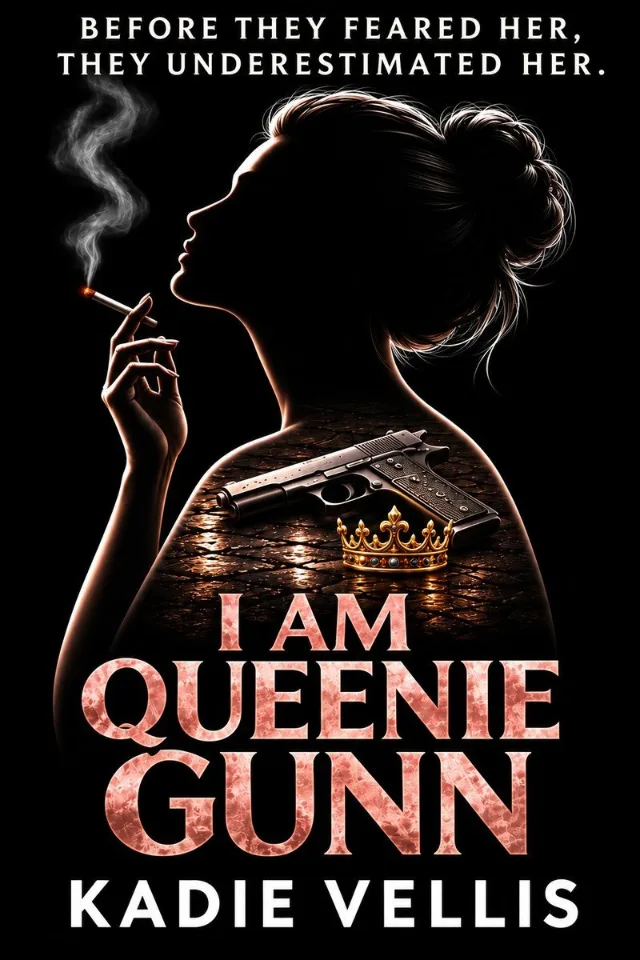
Yes. It’s book one of the Gunn Family Trilogy. The three books are Who Killed Lenny Gunn?, I Am Queenie Gunn and Carol Gunn Returns.
What order should I read the Gunn Family Trilogy in?
Start with Who Killed Lenny Gunn?, then read I Am Queenie Gunn, the prequel that tells how Queenie met Lenny, and finish with Carol Gunn Returns.
Where is Who Killed Lenny Gunn? set?
In Islington and Hackney in North and East London, along the Regent’s Canal, where the Gunn family have run their corner of the city for decades.
Is there a twist?
Yes, and a big one. We won’t say a word, except that the clues are all there if you go back and look.
Is it a gangland thriller or a psychological thriller?
Both. It’s a London crime family saga with a whodunnit at its heart, so if you love Martina Cole, Kimberley Chambers or the TV series MobLand, this is for you.
How long is the book?
The Kindle edition is 301 pages. It’s available on Kindle and in paperback on Amazon.
If this one gets under your skin


Kadie Vellis
Be the first to know.
New releases, cover reveals and the odd secret, straight to your inbox.
Join the readers’ list